INSTITUTIONAL SEMINAR
Seminar on "Stellar Astronomy" at IMIT by Dr. Cristina Pukturi
On Monday, June 8th, the Institutional Seminar led by Dr. Cristina Putkuri took place. The meeting, held in a hybrid format, brought together researchers, professionals, and students to discuss massive stars and contemporary astrophysics.
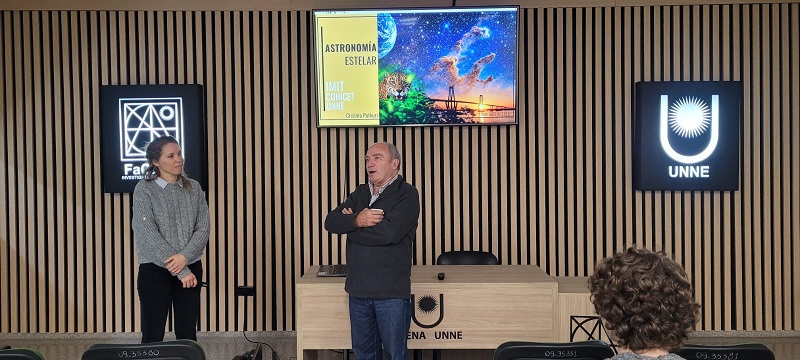
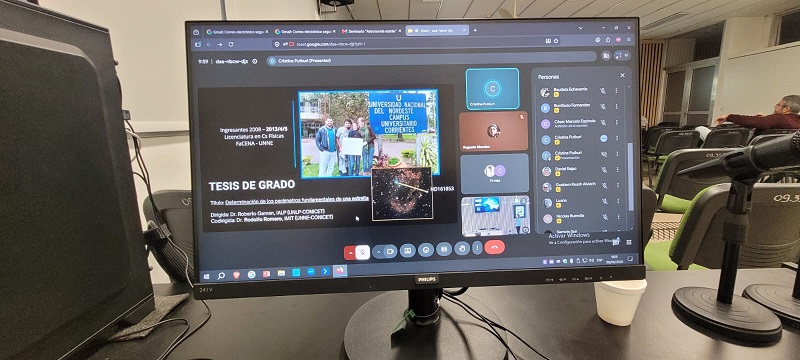
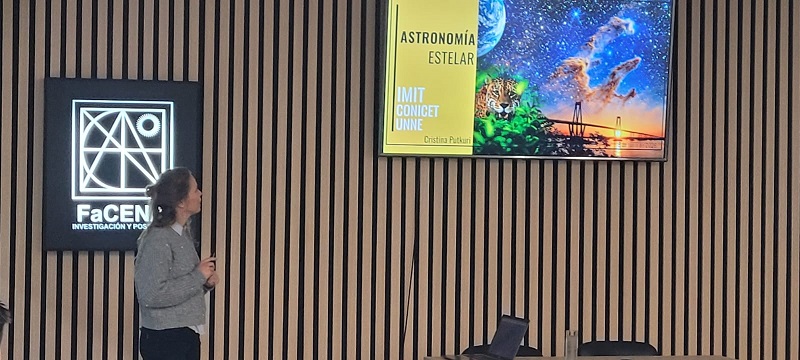
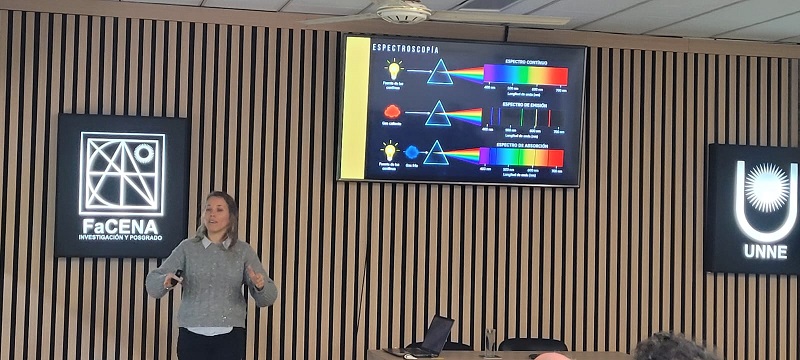
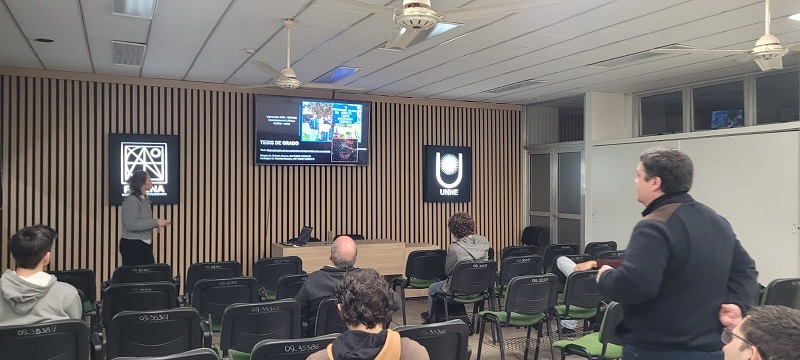
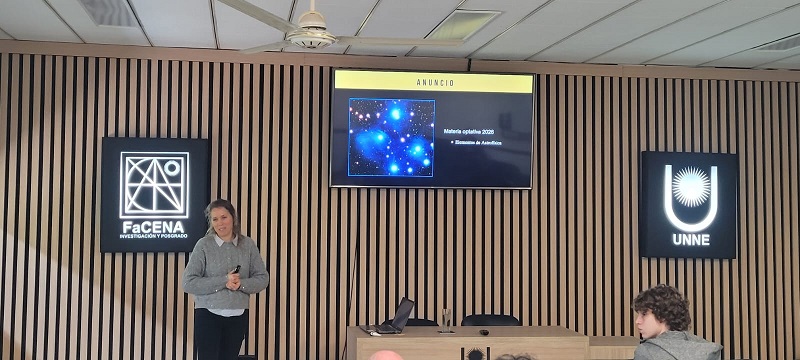


With outstanding participation both in person at the FaCENA Postgraduate Classroom and virtually, the Institute of Modeling and Technological Innovation (IMIT) held another scientific update session. On this occasion, the academic community gathered to attend the lecture entitled "Stellar Astronomy."
Stellar astronomy is the branch of astronomy dedicated to the study of the physical properties, formation, evolution, and final stages of stars. The event reflected the institute's ongoing commitment to promoting opportunities for professional development that enrich scientific knowledge in the region.
Fundamental Tools and an Interdisciplinary Approach.
During the talk, Dr. Putkuri presented a detailed introduction to the topics being developed in the field, clearly addressing the observational methods and cutting-edge tools currently used in the analysis of massive stars. The central objective was more than achieved: to bring contemporary astronomical research closer to students and professionals from diverse scientific disciplines, promoting local interest in astrophysics and fostering a valuable space for interdisciplinary exchange.
A valuable addition for the region.
The speaker, Dr. Cristina Putkuri, has over 12 years of experience in the scientific field and higher education. She holds a degree in Physical Sciences from the National University of the Northeast (UNNE) and a PhD in Astronomy from the National University of La Plata (UNLP).
As a member of GEMAE (Massive Stars and Stellar Associations Research Group of the Institute of Astrophysics of La Plata), she has conducted postdoctoral research with the support of CONICET and the FONCYT Agency. Specializing in the acquisition, reduction, and analysis of astronomical data, her recent move to the city of Corrientes represents a significant contribution to our scientific community.
"Exploring the cosmos not only allows us to understand the fundamental laws of the universe, but also to expand the frontiers of interdisciplinary knowledge within our own community," the researcher emphasized.
From the Institutional Seminars Coordination of IMIT, we deeply thank the scientific and educational community for joining us at this meeting and for their constant support in disseminating these activities that essentially seek to communicate and transmit science.